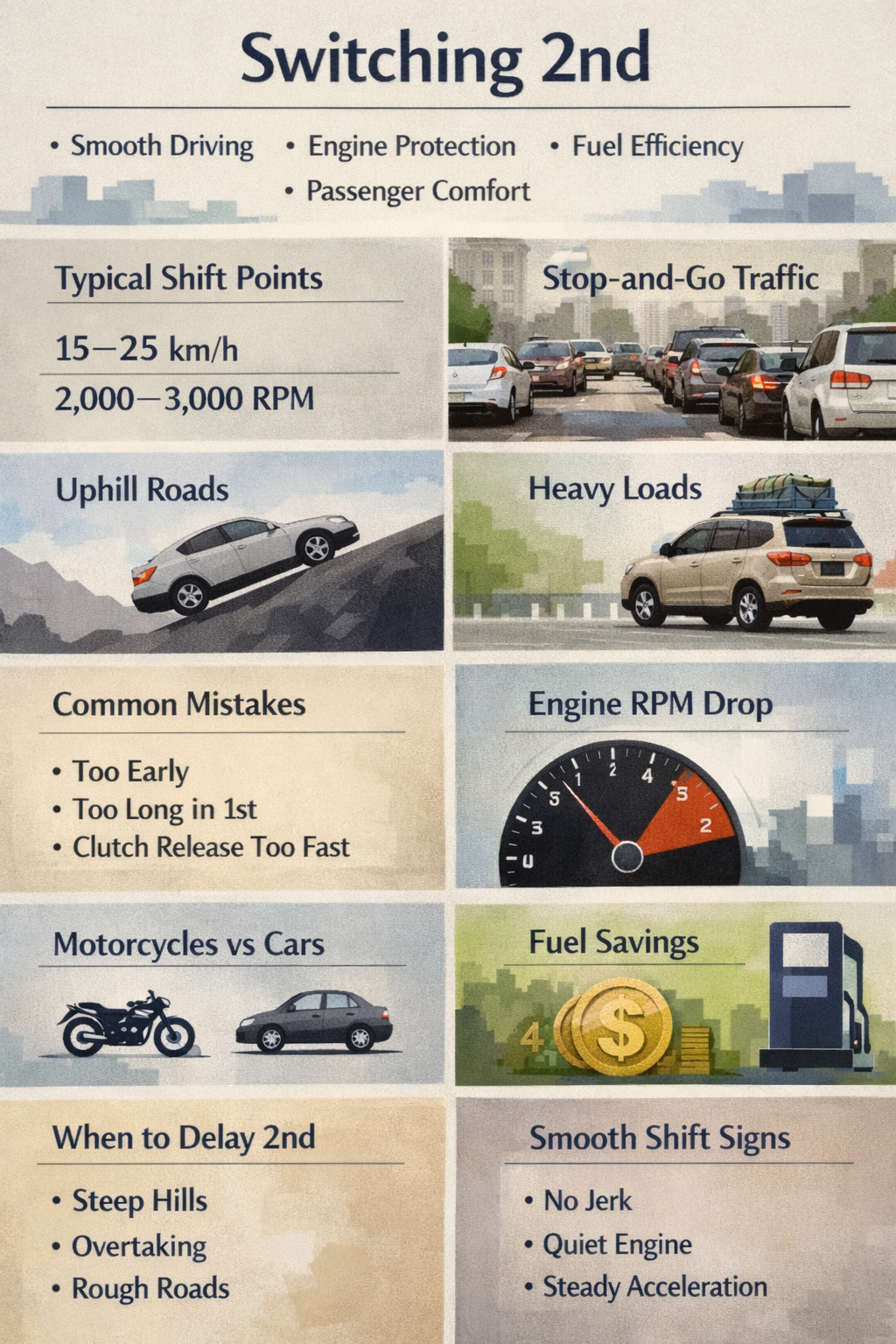
Switching 2nd is one of those small driving actions that quietly shapes how smooth, efficient, and safe your driving feels. Most drivers learn it early, yet many never fully understand why shifting into second gear matters so much.
Whether you’re driving a manual car, riding a motorcycle, or simply trying to improve control in traffic, switching 2nd gear sits at the transition point between movement and momentum. Done correctly, it protects the engine, improves fuel efficiency, and makes driving noticeably smoother. Done poorly, it leads to jerks, engine strain, or unnecessary wear.
Understanding this shift isn’t about memorizing rules. It’s about recognizing how speed, engine behavior, and road conditions work together.
What Does Switching 2nd Actually Mean?
In simple terms, switching 2nd refers to shifting from first gear into second gear once the vehicle has gained initial motion.
First gear exists mainly to start movement. It delivers high torque but limited speed. Second gear takes over once the vehicle no longer needs that heavy pulling power.
Think of first gear as pushing a heavy object from rest. Once it starts moving, maintaining motion requires less effort. That’s where second gear becomes more efficient.
Most vehicles reach this transition somewhere between:
- 15–25 km/h in city driving
- 2,000–3,000 RPM for standard petrol engines
- Slightly lower RPM for diesel engines
These numbers vary depending on vehicle design, load, and driving conditions.
Why Switching 2nd Matters More Than Drivers Realize
Many beginners treat gear changes as routine steps. Experienced drivers know each shift directly affects mechanical health and driving comfort.
Switching 2nd correctly helps with:
Engine Protection
Staying too long in first gear forces the engine to rev unnecessarily. Over time, this increases heat and internal stress.
Smooth Acceleration
Second gear allows power delivery to stabilize. The vehicle stops feeling jumpy and begins moving naturally with traffic flow.
Fuel Efficiency
Higher engine revs consume more fuel. Early but appropriate switching 2nd reduces fuel waste during daily driving.
Passenger Comfort
Jerky gear transitions are often caused by delayed or rushed shifts. A smooth second-gear transition eliminates sudden forward pulls.
Switching 2nd in Real Traffic Conditions
Driving lessons often happen on empty roads. Real driving rarely does.
Urban environments constantly challenge timing decisions.
Stop-and-Go Traffic
In crowded streets, drivers frequently move between first and second gear. Switching 2nd too late causes engine noise and wasted fuel.
A practical approach:
- Move off gently in first gear
- Shift once the vehicle rolls comfortably without struggle
You shouldn’t feel resistance when releasing the clutch after shifting.
Uphill Roads
On slopes, switching 2nd depends on engine strength.
If the vehicle loses power immediately after shifting, it means the change happened too early. In such cases, holding first gear slightly longer is safer.
Heavy Load Situations
Cars carrying passengers or cargo need more torque. Switching 2nd may require higher RPM than usual.
The key principle: listen to the engine instead of relying only on speed numbers.
Common Mistakes When Switching 2nd
Even experienced drivers occasionally fall into habits that affect performance.
1. Shifting Too Early
The engine struggles, vibrations increase, and acceleration feels weak.
This often happens when drivers focus only on fuel saving rather than engine response.
2. Holding First Gear Too Long
A loud engine sound usually signals delayed switching 2nd. This wastes fuel and increases mechanical wear.
3. Releasing the Clutch Too Fast
Second gear requires smoother clutch release than first. Sudden release causes jerks.
4. Looking at the Gear Lever
Drivers sometimes glance down while shifting. With practice, switching gears should become muscle memory.
The Mechanical Logic Behind Switching 2nd
Understanding what happens internally makes timing easier.
Inside a transmission:
- First gear multiplies torque heavily.
- Second gear reduces torque but increases speed range.
- Engine RPM drops after the shift.
That RPM drop is intentional. It prevents engine overload while allowing steady acceleration.
If RPM falls too low after shifting, the engine struggles. If RPM remains too high, energy is wasted.
Smooth driving lives in that balance.
Switching 2nd for Beginners: A Practical Method
New drivers benefit from a repeatable process rather than theory.
Step-by-Step Technique
- Accelerate gently in first gear.
- Observe engine sound or RPM rise.
- Press clutch fully.
- Shift into second gear.
- Release clutch slowly while applying light acceleration.
The goal is continuity. The vehicle should feel like it’s flowing forward, not restarting motion.
Switching 2nd in Motorcycles vs Cars
Although the concept remains similar, motorcycles respond faster.
Motorcycles
- Engines rev quicker.
- Gear transitions happen sooner.
- Throttle coordination becomes critical.
Riders often switch 2nd within seconds of moving.
Cars
Cars provide more forgiveness due to heavier weight and smoother transmissions. Timing still matters, but minor errors are less noticeable.
The Role of Engine Sound and Feel
Experienced drivers rarely depend on dashboards alone.
Instead, they notice:
- Engine pitch rising
- Reduced pulling force
- Vehicle vibration changes
These sensory cues naturally signal when switching 2nd makes sense.
Over time, drivers shift instinctively without consciously thinking about speed or RPM.
Fuel Economy and Long-Term Efficiency
One overlooked benefit of proper switching 2nd is cumulative fuel savings.
Daily city driving involves dozens — sometimes hundreds — of gear transitions. Small inefficiencies multiply quickly.
Consistently shifting at appropriate engine speeds can:
- Reduce fuel consumption
- Lower engine temperature
- Extend clutch lifespan
- Improve transmission durability
These gains appear gradually rather than instantly, which is why many drivers underestimate them.
Automatic Cars and the Idea of Switching 2nd
Automatic transmissions handle gear changes electronically, yet the principle still exists.
Modern automatic systems decide when to move from first to second gear based on:
- Throttle pressure
- Engine load
- Road incline
- Driving mode
Aggressive acceleration delays the shift. Gentle driving encourages earlier switching.
Even without manual control, understanding this behavior helps drivers manage smoother acceleration.
Signs You’re Switching 2nd Correctly
You rarely notice perfect shifting — and that’s the point.
Indicators of good timing include:
- No forward jerk
- Smooth acceleration
- Reduced engine noise
- Stable vehicle motion
- Minimal vibration
If passengers cannot feel the shift clearly, it’s usually done right.
When Delaying Switching 2nd Is Actually Better
Certain situations benefit from holding first gear longer.
Steep Hills
Extra torque prevents stalling.
Overtaking at Low Speed
Higher engine power improves response time.
Rough or Uneven Roads
Maintaining torque gives better control.
Driving always depends on context. Fixed rules rarely apply to every road condition.
Building Muscle Memory Over Time
Switching 2nd becomes automatic through repetition rather than conscious effort.
Most drivers develop rhythm after weeks of consistent driving. Eventually, hands and feet coordinate without active thinking.
Practicing in varied conditions — traffic, slopes, empty roads — strengthens adaptability.
Confidence grows when shifts feel predictable.
FAQ: Switching 2nd
When should I switch to second gear while driving?
Usually between 15–25 km/h or around 2,000–3,000 RPM, but engine sound and vehicle response are more reliable indicators than exact numbers.
Why does my car jerk when switching 2nd?
Jerking often happens due to releasing the clutch too quickly or shifting before the car gains enough speed in first gear.
Is switching 2nd early good for fuel saving?
Only if the engine doesn’t struggle. Shifting too early can actually increase fuel use because the engine works harder.
Can switching 2nd damage the engine if done wrong?
Occasional mistakes won’t cause immediate harm, but repeated poor timing can wear out the clutch and transmission over time.
Do automatic cars also switch to second gear?
Yes. Automatic systems handle it internally based on driving conditions, even though the driver doesn’t manually shift.
Mastering switching 2nd isn’t about technical perfection. It’s about understanding motion — how a vehicle transitions from effort to efficiency. Once that relationship becomes clear, smoother driving stops being a skill you practice and becomes a habit you barely notice.
 ATIF
ATIF
[…] Engineering education anywhere in the world carries a demanding workload, and this institution is no exception. […]