The idea behind permanentad is simple on the surface but complex in real use. It refers to advertising or promotional content that does not expire. Once published, it stays visible for the long term—sometimes for years—inside articles, videos, posts, or digital archives.
Permanentad matters because the internet does not forget easily. Content is indexed, cached, shared, and reused long after it is published. When advertising becomes part of that content, its influence extends far beyond a normal campaign timeline. For creators, businesses, and readers, this permanence changes how value, trust, and responsibility work online.
Understanding permanentad properly requires looking beyond definitions and into real-world behavior, search visibility, and user perception.
What Permanentad Really Means in Practice
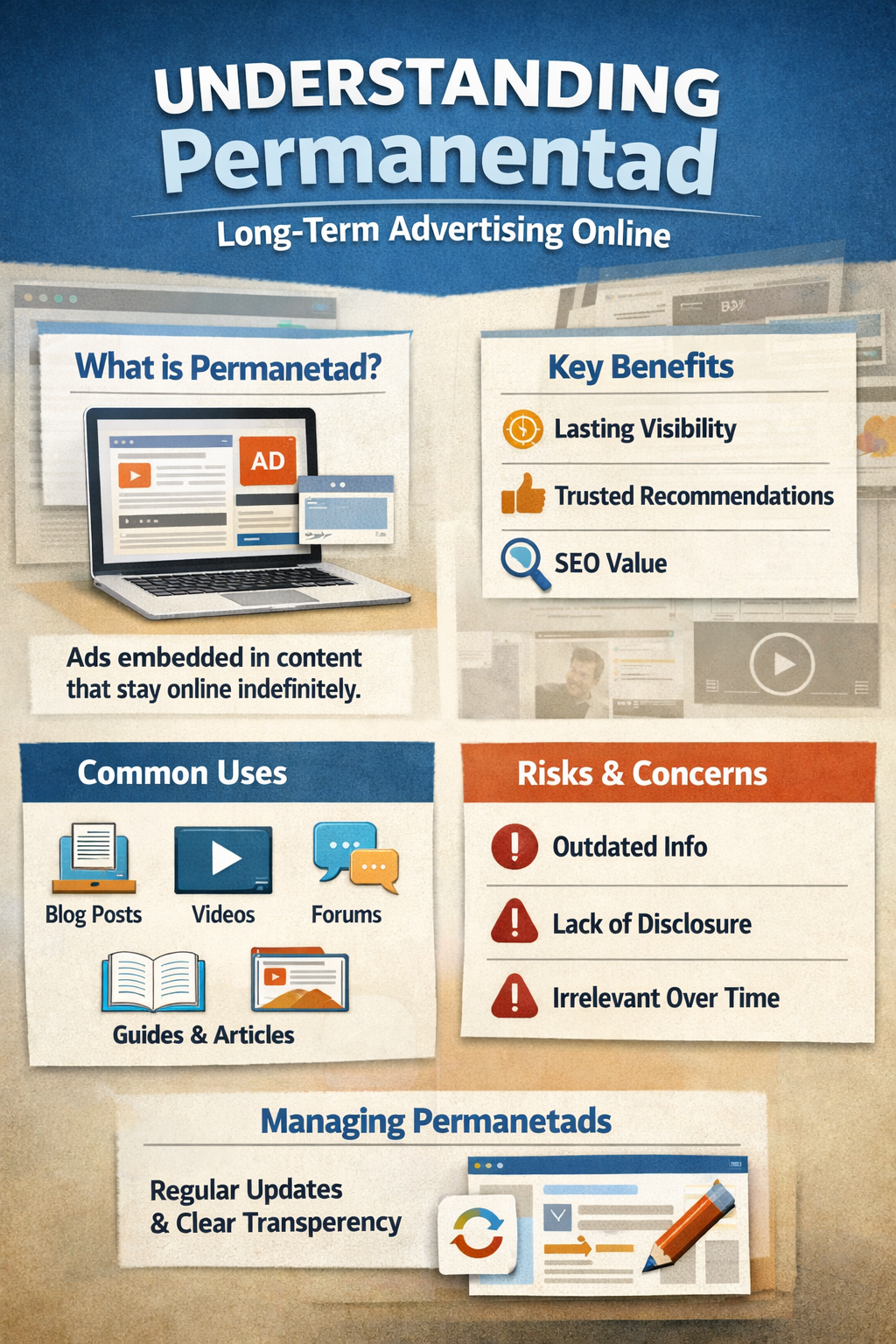
In practice, permanentad is not about technical permanence alone. Most platforms allow edits or removal. What makes a permanentad “permanent” is exposure over time.
Once a page ranks on search engines, gets backlinks, or becomes a reference point, the promotional element inside it continues to be seen. Even if the original agreement ends, the content may still circulate through mirrors, screenshots, or quotes.
A permanentad often lives inside:
- Evergreen blog posts
- Educational guides
- Long-form videos
- Community answers or forums
- Archived news or press content
The key point is that the promotion is integrated into the content itself, not separated as a temporary display ad.
Permanentad vs Traditional Advertising Models
Traditional ads are transactional. You pay for visibility within a fixed window, and once the budget stops, the ad disappears.
Permanentad works more like an asset. Instead of renting attention, a brand embeds itself into content that already has value.
This creates several differences:
- Longevity: Exposure continues without ongoing spend
- Context: The promotion appears alongside useful information
- Trust transfer: The credibility of the content creator affects the ad
However, permanence also removes flexibility. If a product changes, fails, or becomes irrelevant, the ad does not automatically adapt.
Why Permanentad Has Grown So Quickly
Permanentad has grown alongside three major trends.
First, evergreen content. Creators now aim to publish content that remains useful for years. A permanent promotion inside such content is naturally attractive.
Second, ad fatigue. Many users ignore banners and pop-ups. Embedded mentions feel less intrusive and more natural.
Third, SEO-driven publishing. Pages that rank well become long-term traffic sources. Brands want visibility where search demand already exists.
These forces combined have made permanentad a preferred option for long-term exposure.
SEO Implications of Permanentad
Search engines do not evaluate permanence—they evaluate quality, intent, and usefulness.
A permanentad can support SEO if:
- The content is genuinely helpful
- The promotion fits the topic naturally
- Links are relevant and not manipulative
- Disclosures are clear where required
Problems arise when content exists mainly to host advertising. Thin articles with forced mentions often lose rankings over time, regardless of how long they stay published.
Another issue is outdated information. Search engines increasingly value freshness and accuracy. A permanentad tied to obsolete details can weaken the entire page.
Smart publishers periodically review permanent placements to ensure they still align with user intent.
Reader Trust and Long-Term Perception
Readers may not notice a permanentad immediately, but they do notice patterns.
When a recommendation feels earned—based on logic, experience, or relevance—it strengthens trust. When it feels forced, trust declines quickly.
The risk with permanentad is delayed damage. A reader discovering an old article years later may assume the recommendation is still valid. If it is not, frustration is directed at both the publisher and the brand.
This is why ethical permanentad use prioritizes clarity, relevance, and the ability to update.
Legal and Disclosure Considerations
In many regions, sponsored content must be disclosed. Permanentad does not bypass this requirement simply because time passes.
Disclosure protects everyone:
- Readers know what they are seeing
- Publishers reduce legal risk
- Brands avoid reputational harm
Clear labeling does not reduce effectiveness as much as many fear. In fact, transparency often increases credibility over the long term.
When Permanentad Makes Strategic Sense
Permanentad works best when:
- The product or service is stable
- The topic is evergreen
- The audience expects recommendations
- The content is informational, not promotional
Examples include educational tools, reference resources, or long-standing services.
It works poorly when:
- The industry changes rapidly
- The promotion depends on trends
- Accuracy degrades over time
Permanence amplifies both strengths and weaknesses.
Managing Permanentad Over Time
Permanent does not mean unmanaged.
Responsible publishers treat permanentad as a living component of content. They:
- Recheck accuracy periodically
- Update disclosures if rules change
- Remove or revise outdated mentions
- Protect editorial independence
Brands that understand this approach often gain more value than those seeking static placement.
The strongest permanentad relationships are built on shared responsibility, not fixed contracts alone.
Common Misunderstandings About Permanentad
Many people assume permanentad guarantees traffic forever. It does not. Visibility depends on content quality, relevance, and competition.
Others believe permanentad is deceptive by nature. It is not. Deception comes from poor execution, not from duration.
Another misconception is that permanentad is “set and forget.” In reality, it requires more thought than short-term advertising, not less.
FAQ About Permanentad
Is permanentad always paid?
No. Some permanentads emerge organically through recommendations that gain long-term visibility. Payment is common but not required.
Can permanentad hurt SEO rankings?
Yes, if it creates thin content, unnatural links, or misleading information. Quality and intent matter more than duration.
How long does a permanentad usually last?
There is no fixed timeframe. It lasts as long as the content remains accessible, indexed, and relevant.
Should old permanentads be updated?
If information has changed, updating is responsible and often beneficial for both users and search visibility.
Can readers trust permanentads?
They can when disclosures are clear and the promotion aligns naturally with the content’s purpose.
Is permanentad suitable for new websites?
It can be risky early on. New sites benefit from flexibility and credibility before locking content into long-term promotions.
Permanentad reflects how modern content works: long-lived, discoverable, and influential beyond its original moment. When handled with care, it adds value. When treated carelessly, it leaves a lasting mark for the wrong reasons.