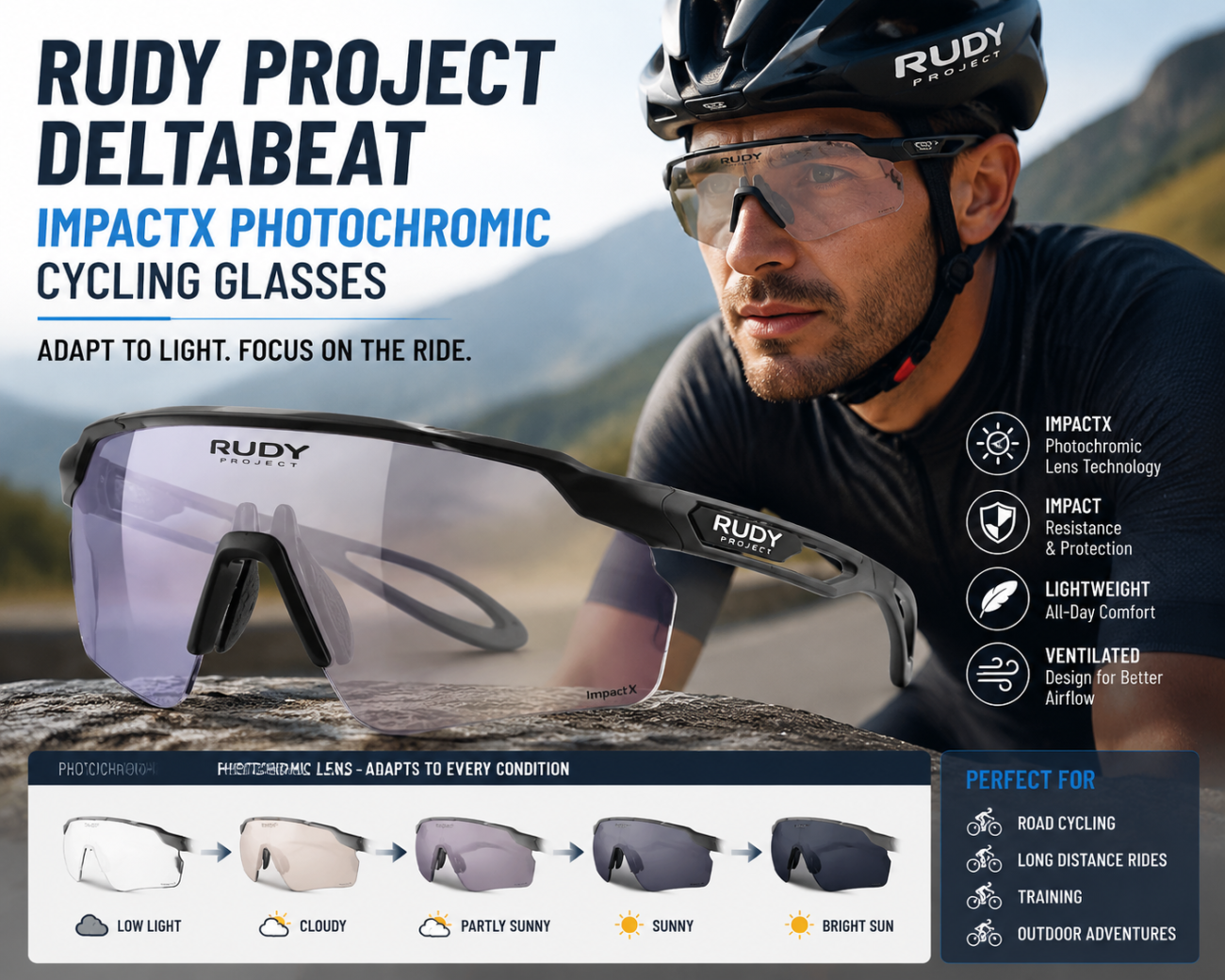
Choosing the right pair of cycling glasses is not only about appearance. For many riders, eyewear directly affects comfort, safety, and performance, especially when conditions change throughout a ride. The Rudy Project Deltabeat ImpactX Photochromic Cycling Glasses are designed for cyclists who want adaptable eye protection without constantly changing lenses during different weather conditions.
Cycling often involves moving between bright sunlight, shaded roads, forests, tunnels, and cloudy skies. A fixed dark lens may work well at noon but become uncomfortable when light levels drop. Photochromic cycling glasses aim to solve this problem by automatically adjusting lens darkness according to available light.
The Rudy Project Deltabeat ImpactX Photochromic model combines a lightweight sports design with Rudy Project’s ImpactX lens technology, making it an option worth considering for road cyclists, endurance riders, and outdoor athletes who spend long hours on the bike.
What Makes Rudy Project Deltabeat ImpactX Photochromic Cycling Glasses Different?
The main advantage of the Rudy Project Deltabeat ImpactX Photochromic Cycling Glasses is the ability of the photochromic lens to adapt to changing environments. Instead of manually switching between clear, tinted, or dark lenses, the lens responds to surrounding light conditions.
For cyclists, this can make a noticeable difference during longer rides. Early morning starts, changing weather, and routes with mixed sun and shade can create situations where traditional sunglasses become inconvenient.
The Deltabeat design focuses on providing a balance between coverage, ventilation, and everyday cycling practicality. It is not designed only for professional racing environments but also suits riders who want reliable performance during training sessions, weekend rides, and outdoor adventures.
Understanding ImpactX Photochromic Lens Technology
A photochromic lens works by changing its tint level when exposed to ultraviolet light. In brighter conditions, the lens becomes darker to reduce glare and improve visual comfort. When light decreases, it becomes lighter to maintain visibility.
The ImpactX lens technology from Rudy Project is known for combining impact resistance with optical clarity. For cycling, this matters because glasses are not only protecting against sunlight but also against dust, insects, small stones, and unexpected debris on the road.
A cyclist traveling at speed has limited reaction time. Clear vision can help identify road hazards earlier, especially when riding downhill or in unfamiliar areas.
Benefits of Photochromic Lenses for Cycling
Photochromic lenses offer several practical benefits:
- Reduced need to carry extra lenses
- Better comfort during changing weather
- Improved visibility in mixed lighting
- Less eye strain during extended rides
For example, a rider starting a morning route under cloudy skies may later encounter full sunlight. Instead of stopping to change eyewear, the lens gradually adjusts as conditions change.
Design and Comfort of the Rudy Project Deltabeat
Cycling glasses need to remain comfortable after several hours of use. A lightweight frame, secure fit, and proper ventilation become more important the longer a rider stays on the road.
The Deltabeat follows a performance-oriented design with a shape that aims to provide coverage while maintaining airflow. Good ventilation is essential because trapped air behind the lens can create fogging issues, especially during slower climbs or colder rides.
The frame design also plays an important role in stability. Glasses that constantly move or slide during intense cycling can become distracting. A secure fit allows riders to focus on cadence, traffic, and road conditions rather than adjusting their eyewear.
Lens Performance in Different Riding Conditions
One of the strongest reasons cyclists choose photochromic glasses is versatility. Weather and lighting conditions rarely stay identical throughout a complete ride.
Bright Sunny Conditions
During strong sunlight, a darker photochromic lens helps reduce glare and makes the ride more comfortable. This is especially useful on open roads where there is little natural shade.
Reducing excessive brightness can also help prevent tired eyes during long-distance cycling.
Cloudy or Low-Light Conditions
A common problem with traditional cycling sunglasses is that darker lenses can become uncomfortable when clouds appear or when riding in shaded areas.
A photochromic lens allows more light through in darker environments, helping maintain clearer vision without requiring a lens change.
Variable Weather Routes
Cyclists who ride through mountains, forests, or mixed terrain often experience rapid changes in lighting. A route may include open sunlight, tree-covered sections, and changing weather within the same hour.
This is where adaptive lenses become particularly practical.
Rudy Project Deltabeat ImpactX Photochromic Cycling Glasses for Different Types of Riders
Not every cyclist needs the same type of eyewear. The best choice depends on riding style, environment, and personal preference.
Road Cyclists
Road cyclists often spend several hours exposed to changing light conditions. The Deltabeat’s adaptive lens approach can be useful for riders who prefer simplicity and do not want to carry multiple lens options.
Endurance and Long-Distance Riders
For endurance cyclists, comfort becomes just as important as optical performance. Small annoyances become noticeable during five- or six-hour rides.
A comfortable frame and adaptable lens can reduce distractions during longer distances.
Casual and Fitness Riders
Weekend riders may not need professional-level equipment, but quality eyewear can still improve the experience. A photochromic lens provides convenience because one pair of glasses can handle different riding situations.
Comparing Photochromic Cycling Glasses With Standard Sunglasses
Traditional cycling sunglasses usually come with a fixed tint. They can perform extremely well in specific conditions but may not adapt when the environment changes.
Photochromic glasses provide more flexibility. However, they may not always become as dark as specialized sunglasses designed specifically for extreme sunlight.
For riders who mainly cycle in consistently bright conditions, a dedicated dark lens may still be preferable. For those who experience changing environments, photochromic lenses offer a practical advantage.
The right choice depends on where and when you ride.
Things to Consider Before Buying Rudy Project Deltabeat ImpactX Photochromic Cycling Glasses
Although adaptive lenses are useful, buyers should consider a few factors before making a decision.
Riding Environment
If most rides happen in bright desert-like conditions or areas with intense sunlight, a darker dedicated cycling lens may provide stronger protection.
For mixed conditions, photochromic technology becomes more valuable.
Fit and Face Shape
Cycling glasses are highly personal. A model that feels comfortable for one rider may not fit another person the same way.
It is worth considering frame width, nose support, and how securely the glasses sit during movement.
Maintenance
Like all cycling eyewear, proper care helps maintain optical quality. Lenses should be cleaned with suitable materials to avoid scratches and stored safely when not in use.
Why Cyclists Choose Adaptive Eyewear
Modern cycling is becoming more focused on practical equipment rather than simply adding more gear. Riders often prefer products that perform well across multiple situations.
Adaptive eyewear reflects this approach. Instead of carrying separate sunglasses for every weather condition, cyclists can rely on one pair designed for flexibility.
The Rudy Project Deltabeat ImpactX Photochromic Cycling Glasses fit this idea by offering a solution for riders who value convenience, protection, and adaptable vision.
Frequently Asked Questions About Rudy Project Deltabeat ImpactX Photochromic Cycling Glasses
Are Rudy Project Deltabeat ImpactX Photochromic Cycling Glasses good for road cycling?
Yes, they are designed with road cycling needs in mind. Their adaptive lens technology makes them useful for routes where sunlight and shade constantly change.
Do photochromic cycling glasses work at night?
Most photochromic lenses are not designed for complete darkness. They can improve visibility in low-light daytime conditions, but riders usually need clear lenses or dedicated night eyewear for nighttime cycling.
Are ImpactX lenses durable?
ImpactX lenses are designed with impact resistance in mind, making them suitable for outdoor sports where protection from debris and accidental impacts matters.
Can these glasses replace multiple cycling lenses?
For many riders, yes. A photochromic lens can reduce the need for carrying separate lenses, although some cyclists may still prefer specialized lenses for extreme conditions.
Are they suitable for long-distance cycling?
They can be a good choice for endurance riders because adaptive lenses and comfortable eyewear design can reduce distractions during longer rides.
Final Thoughts on Rudy Project Deltabeat ImpactX Photochromic Cycling Glasses
The Rudy Project Deltabeat ImpactX Photochromic Cycling Glasses are designed around a simple idea: cycling eyewear should adapt as quickly as the rider’s environment changes.
Their biggest strength is versatility. Riders who frequently move between bright sunlight, cloudy conditions, and shaded roads can benefit from a lens that adjusts automatically.
While no cycling glasses are perfect for every rider or every situation, the Deltabeat offers a practical balance of protection, comfort, and convenience. For cyclists looking for reliable everyday eyewear rather than a single-condition racing lens, it is a model worth considering.
