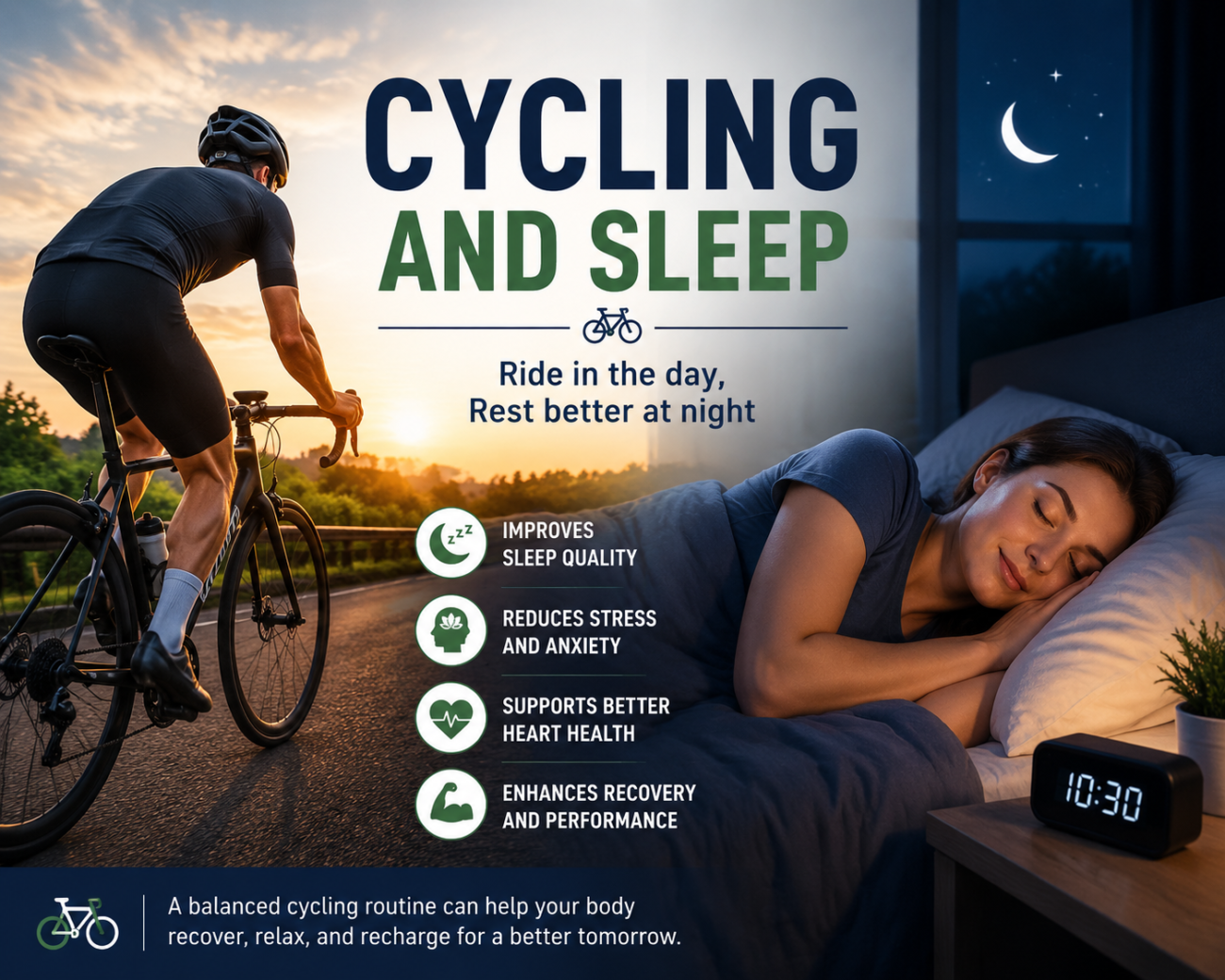
Cycling and sleep are closely connected because regular physical activity can influence how quickly you fall asleep, how deeply you rest, and how your body recovers overnight. Many cyclists notice that a good ride leaves them feeling calmer and more ready for bed, while poor sleep often makes training sessions feel harder than usual.
Sleep is not just downtime after exercise. It is when the body repairs muscles, restores energy levels, balances hormones, and supports mental recovery. For cyclists, whether they ride for fitness, commuting, or competition, understanding the relationship between cycling and sleep can help improve both performance and overall health.
How Cycling Affects Sleep Quality
Cycling is an aerobic activity that increases heart rate, improves circulation, and helps regulate the body’s natural sleep-wake cycle. Regular rides can make it easier for many people to fall asleep and stay asleep throughout the night.
One of the main reasons cycling supports better sleep is that it helps reduce daily stress. Physical activity encourages the release of chemicals such as endorphins and can lower levels of stress-related hormones. A relaxed mind is often better prepared for restful sleep.
A moderate cycling session during the day can also increase the body’s need for recovery. After using energy and working muscles, the body naturally enters a repair phase, which can contribute to deeper sleep.
However, the timing and intensity of cycling matter. A long, intense ride late at night may have the opposite effect for some people because elevated heart rate and increased alertness can delay sleep.
The Science Behind Cycling and Better Sleep Patterns
The human body follows a natural internal clock known as the circadian rhythm. This system controls when we feel awake and when we become tired. Regular exercise, including cycling, can help keep this rhythm stable.
Morning and afternoon cycling sessions are often linked with better sleep patterns because exposure to daylight helps regulate melatonin production. Melatonin is a hormone that signals to the body that it is time to prepare for sleep.
Cycling also supports better sleep by improving physical health factors that can interfere with rest. For example, maintaining a healthy weight and improving cardiovascular fitness may reduce problems such as poor breathing during sleep or nighttime discomfort.
Research on exercise and sleep generally shows that consistent physical activity improves sleep quality, but the effect varies between individuals. Someone who cycles casually a few times per week may experience different results compared with an athlete following a demanding training schedule.
Why Cyclists Need Quality Sleep for Recovery
Sleep plays a major role in cycling performance. During deep sleep, the body repairs muscle tissue damaged during exercise and replenishes energy stores used during rides.
A cyclist who regularly gets enough sleep may notice improvements in endurance, concentration, reaction time, and motivation. These benefits are especially important during longer rides where mental focus becomes just as important as physical strength.
Poor sleep, on the other hand, can affect cycling in several ways. Riders may feel heavier legs, slower recovery, reduced motivation, and difficulty maintaining their usual pace.
For competitive cyclists, sleep is often treated as part of the training plan. A well-designed schedule includes not only workouts but also enough recovery time to allow the body to adapt.
Can Cycling Help People Fall Asleep Faster?
For many people, cycling can make falling asleep easier because it helps release physical tension and reduces stress accumulated during the day.
A relaxed evening routine combined with regular exercise can create a stronger connection between daytime activity and nighttime rest. Even a gentle bike ride can provide a mental break from work, screens, and daily responsibilities.
However, cycling immediately before bedtime does not work for everyone. High-intensity rides can increase body temperature and stimulate the nervous system, making some riders feel more awake.
If evening cycling is the only available option, a low-intensity ride followed by a calming routine may be more suitable than a hard training session.
Best Time to Cycle for Better Sleep
The ideal cycling time depends on personal schedule, lifestyle, and how the body responds to exercise.
Morning Cycling
Morning rides can be beneficial because they provide natural light exposure and help set the body’s internal clock. Many cyclists also report feeling more energetic throughout the day after starting with physical activity.
Morning cycling may be especially helpful for people who struggle with irregular sleep schedules.
Afternoon Cycling
Afternoon rides are another good option because body temperature, muscle flexibility, and physical performance are often naturally higher later in the day.
A moderate afternoon ride can help release stress without affecting nighttime sleep.
Evening Cycling
Evening cycling can still be healthy, especially if it is relaxing rather than intense. A casual bike ride after work may help clear the mind and improve mood.
For better sleep, avoid finishing very demanding workouts immediately before going to bed.
How Much Cycling Is Needed to Improve Sleep?
There is no single amount of cycling that guarantees better sleep. The right amount depends on fitness level, age, health, and personal goals.
For general health, many adults benefit from regular moderate aerobic activity throughout the week. This can include cycling sessions that raise the heart rate but still allow comfortable conversation.
Beginners often see benefits from shorter rides performed consistently. A 20–30 minute bike ride several times per week may be enough to support better sleep habits.
More experienced cyclists should pay attention to recovery. Increasing training volume without enough rest can create fatigue and may negatively affect sleep quality.
The Connection Between Overtraining and Poor Sleep
While cycling can improve sleep, too much cycling without proper recovery can disturb it.
Overtraining happens when the body receives more stress than it can effectively recover from. Signs may include constant tiredness, declining performance, mood changes, and difficulty sleeping.
Some cyclists assume that feeling exhausted automatically leads to better sleep. In reality, excessive training stress can keep the nervous system activated and make restful sleep harder.
A balanced approach includes hard training days, easier rides, rest days, proper nutrition, and consistent sleep habits.
Cycling, Stress Reduction, and Mental Sleep Benefits
Sleep problems are often connected to stress and an active mind. Cycling can help by providing time away from daily pressure and allowing people to focus on movement and surroundings.
Outdoor cycling has an additional benefit because spending time outside can improve mood and expose the body to natural light. A peaceful ride through a park, countryside, or quiet neighborhood can become a valuable mental reset.
Many recreational cyclists describe riding as a form of moving meditation. The repetitive rhythm of pedaling can create a calming effect that helps reduce mental tension.
Nutrition, Hydration, and Sleep After Cycling
What cyclists eat and drink after riding can also influence sleep quality.
After longer rides, the body needs carbohydrates to restore energy and protein to support muscle repair. A balanced post-ride meal can help the recovery process.
Hydration is equally important. Dehydration may cause discomfort, muscle cramps, or nighttime waking. However, drinking large amounts of fluid right before bed may interrupt sleep because of frequent trips to the bathroom.
Caffeine intake should also be considered. Coffee or energy products used before cycling may remain in the system for several hours and affect sleep for some individuals.
Practical Tips to Improve Cycling and Sleep Balance
Small adjustments can make a noticeable difference:
- Keep a consistent cycling routine rather than relying on occasional intense rides.
- Avoid very hard workouts close to bedtime.
- Use rest days to allow muscle recovery.
- Maintain a regular sleep schedule whenever possible.
- Pay attention to how your body responds to different training times.
- Combine cycling with healthy sleep habits, such as reducing screen time before bed.
The goal is not simply to ride more but to create a lifestyle where exercise and recovery support each other.
Frequently Asked Questions About Cycling and Sleep
Does cycling help you sleep better?
Yes, regular cycling can improve sleep quality for many people by reducing stress, supporting physical health, and helping regulate the body’s natural sleep rhythm. Results can vary depending on exercise intensity and individual habits.
Is cycling before bed good for sleep?
A gentle evening ride may help some people relax, but intense cycling close to bedtime can make others feel more alert. The best approach depends on how your body responds.
How does poor sleep affect cycling performance?
Poor sleep can reduce energy, concentration, reaction time, and recovery ability. Cyclists may find workouts feel harder and performance may decline after several nights of insufficient rest.
Can cycling reduce insomnia?
Cycling may help improve sleep difficulties related to stress and inactivity. However, persistent insomnia may involve other factors and should be addressed with appropriate professional guidance.
Should cyclists sleep more than non-cyclists?
Cyclists with demanding training schedules may need additional recovery time, including more sleep. The exact amount depends on training intensity, lifestyle, and individual recovery needs.
Final Thoughts
Cycling and sleep have a relationship built around balance. Regular bike rides can support deeper rest, reduce stress, and improve recovery, but only when combined with enough sleep and proper recovery habits.
For everyday riders, cycling can become more than a way to stay fit. It can be part of a healthier routine that helps the body feel stronger during the day and more relaxed at night. The key is finding the right combination of movement, recovery, and consistency.
