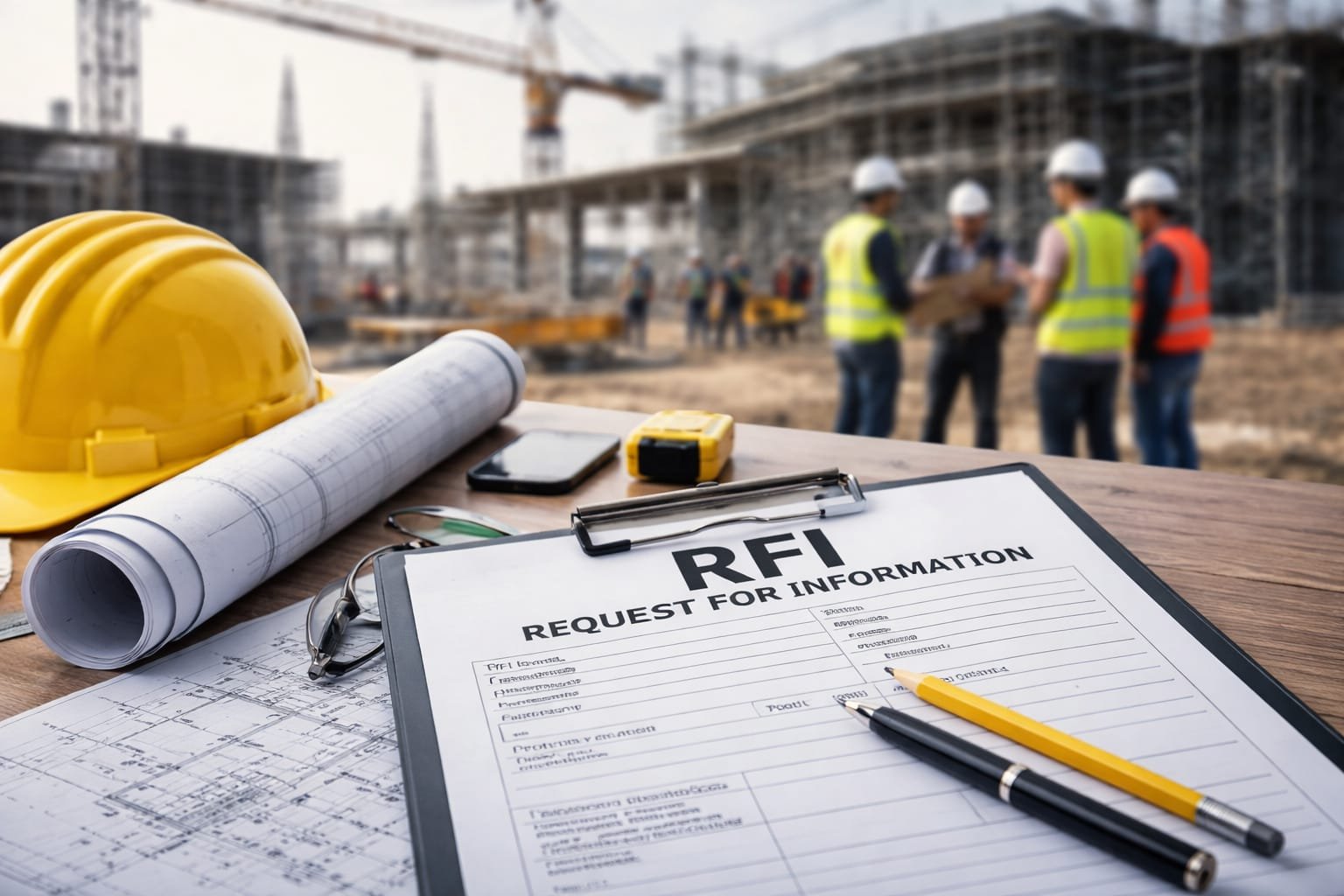
In construction, small gaps in information can quickly turn into delays, rework, or costly mistakes. That’s where RFI construction comes into play. An RFI, or Request for Information, is one of the most practical tools used on job sites to clarify uncertainties before they become problems.
Whether you’re managing a large commercial build or a small residential project, RFIs act as a formal line of communication between contractors, architects, engineers, and clients. When used well, they keep everyone aligned and reduce the risk of misinterpretation.
What Is an RFI in Construction?
An RFI (Request for Information) is a formal document used to ask questions or request clarification about project details that are unclear, incomplete, or conflicting.
In simple terms, it’s how a contractor says, “I need more information before I proceed.”
These questions usually relate to:
- Design drawings
- Material specifications
- Dimensions or measurements
- Conflicting instructions between documents
For example, if a drawing shows one type of flooring but the specification sheet lists another, the contractor submits an RFI to confirm which one should be used. Without that step, assumptions could lead to rework later.
Why RFIs Exist in Construction Projects
Even well-prepared construction documents aren’t perfect. Projects involve multiple teams, tight deadlines, and evolving designs. It’s normal for questions to arise once work begins.
RFIs exist to create a clear, traceable process for resolving those questions.
Without RFIs, communication tends to happen informally—through phone calls or quick conversations—which can lead to misunderstandings. RFIs, on the other hand, provide written documentation that can be tracked and referenced later.
They also help avoid situations where:
- Work is done incorrectly due to assumptions
- Teams interpret drawings differently
- Disputes arise over responsibility
In practice, RFIs are less about bureaucracy and more about protecting the project from preventable issues.
The RFI Construction Workflow
Understanding the RFI workflow helps explain why it’s such a critical part of project management. While the exact process may vary slightly between companies, the general flow stays consistent.
1. Identifying the Issue
An RFI begins when someone on the project—usually a contractor or subcontractor—spots something unclear.
This could be a missing detail, conflicting drawings, or a design that doesn’t match site conditions.
The key here is timing. The earlier the issue is raised, the less impact it has on the schedule.
2. Drafting the RFI
The contractor prepares a formal RFI document that clearly explains:
- The issue or question
- Reference documents (drawings, specs, sections)
- Suggested solutions, if applicable
Good RFIs are specific and concise. Vague questions tend to create back-and-forth delays.
3. Submission to the Design Team
The RFI is submitted to the architect, engineer, or project consultant—whoever is responsible for the relevant information.
Most projects today use digital construction management platforms, but some still rely on email-based workflows.
4. Review and Response
The design team reviews the request and provides clarification.
This response may include:
- A direct answer
- Revised drawings
- Additional instructions
- A request for more information
Response time varies depending on project complexity and urgency.
5. Implementation on Site
Once the response is received, the contractor proceeds with the clarified information.
At this stage, the RFI becomes part of the project record. It may also influence future inspections, billing, or change orders.
Types of RFIs You’ll Commonly See
Not all RFIs are created equal. Some are straightforward, while others signal deeper issues in the project documents.
Design Clarification RFIs
These are the most common. They deal with unclear or missing details in drawings or specifications.
For instance, a contractor may ask for the exact placement of fixtures that aren’t fully defined in the plans.
Coordination RFIs
These arise when different trades overlap or conflict.
A typical example is HVAC ductwork interfering with structural elements. The RFI helps determine which system takes priority or how to adjust the design.
Site Condition RFIs
Sometimes, real-world conditions don’t match the plans.
Unexpected soil conditions, existing structures, or measurement discrepancies can all trigger RFIs.
Value Engineering RFIs
These suggest alternative materials or methods that could reduce cost or improve efficiency.
While not always accepted, they often lead to useful discussions.
Why RFI Construction Matters More Than It Seems
At first glance, RFIs may look like administrative paperwork. In reality, they play a central role in keeping projects on track.
Preventing Costly Mistakes
Acting on unclear information is one of the fastest ways to create rework.
An RFI slows things down just enough to ensure accuracy before proceeding.
Protecting All Parties
RFIs create a documented trail of decisions.
If disputes arise later—over delays, costs, or responsibilities—these records provide clarity on who said what and when.
Improving Communication
Construction projects involve many moving parts and personalities.
RFIs provide a structured way to communicate that reduces ambiguity and keeps discussions focused.
Supporting Project Scheduling
Unanswered questions can stall progress.
By formally tracking RFIs, project managers can identify bottlenecks and follow up before delays escalate.
Common Problems with RFIs (And How to Avoid Them)
Despite their benefits, RFIs can become a source of frustration if not handled properly.
Too Many RFIs
A high volume of RFIs often signals deeper issues, such as incomplete design documents.
While some RFIs are inevitable, excessive numbers can slow the project and strain relationships.
Poorly Written RFIs
Vague or overly broad questions lead to unclear answers.
A well-written RFI should point directly to the issue and include enough context to avoid confusion.
Slow Response Times
Delays in responses can impact the project schedule.
Clear timelines and accountability help keep the process moving.
Using RFIs for the Wrong Reasons
Sometimes RFIs are used to shift responsibility or document disputes rather than genuinely seek clarification.
This can create tension and reduce trust among project teams.
Best Practices for Managing RFIs
Experienced teams treat RFIs as a valuable tool, not just a requirement.
Be Clear and Specific
Reference exact drawings, sections, and details.
The more precise the question, the more useful the answer.
Ask Early
Waiting until the last minute increases the risk of delays.
Raising questions early gives the design team time to respond properly.
Track Everything
Use a centralized system to log RFIs, responses, and status.
This helps avoid duplication and keeps everyone informed.
Limit Unnecessary RFIs
Before submitting, check whether the answer already exists in project documents.
This saves time for both the contractor and the design team.
Maintain Professional Tone
Even in high-pressure situations, RFIs should remain neutral and factual.
Clear communication goes further than emotional or defensive language.
How Technology Is Changing RFI Construction
Modern construction management software has significantly improved how RFIs are handled.
Instead of scattered emails and paper trails, teams can now:
- Submit RFIs through centralized platforms
- Attach drawings and photos directly
- Track response times in real time
- Maintain a searchable record of all communications
These tools don’t eliminate the need for RFIs, but they make the process more efficient and transparent.
Still, technology doesn’t fix poorly written questions or unclear project documents. The fundamentals of good communication remain the same.
The Bigger Picture: RFIs as a Project Health Indicator
Over time, experienced project managers start to see RFIs as more than just questions.
The number, type, and timing of RFIs can reveal patterns:
- A spike early in the project may indicate incomplete design
- Frequent coordination RFIs may point to poor planning between trades
- Repetitive questions may suggest unclear documentation
In that sense, RFIs act like a diagnostic tool. They help identify where a project needs attention before issues grow larger.
FAQ: RFI Construction
What does RFI stand for in construction?
RFI stands for Request for Information. It’s a formal way for contractors or teams to ask for clarification about project details before continuing work.
Who is responsible for responding to an RFI?
Typically, the architect, engineer, or design consultant responds, depending on the nature of the question. In some cases, the project manager may coordinate the response.
How long should an RFI response take?
It depends on project complexity, but many contracts define a standard timeframe, often between 3 to 10 business days. Urgent RFIs may be prioritized.
Are RFIs legally important?
Yes, they can be. RFIs create a written record of communication, which can be used in case of disputes, claims, or project reviews.
What happens if an RFI is ignored?
If left unanswered, work may be delayed or proceed based on assumptions, which increases the risk of errors and potential liability.
Can RFIs lead to change orders?
They can. If the response changes the scope, materials, or method of work, it may result in a change order affecting cost or schedule.
RFIs may seem like a small part of construction on the surface, but they sit at the center of how projects communicate, adapt, and move forward. When handled thoughtfully, they reduce uncertainty and keep progress steady—even when the plans aren’t perfect.
