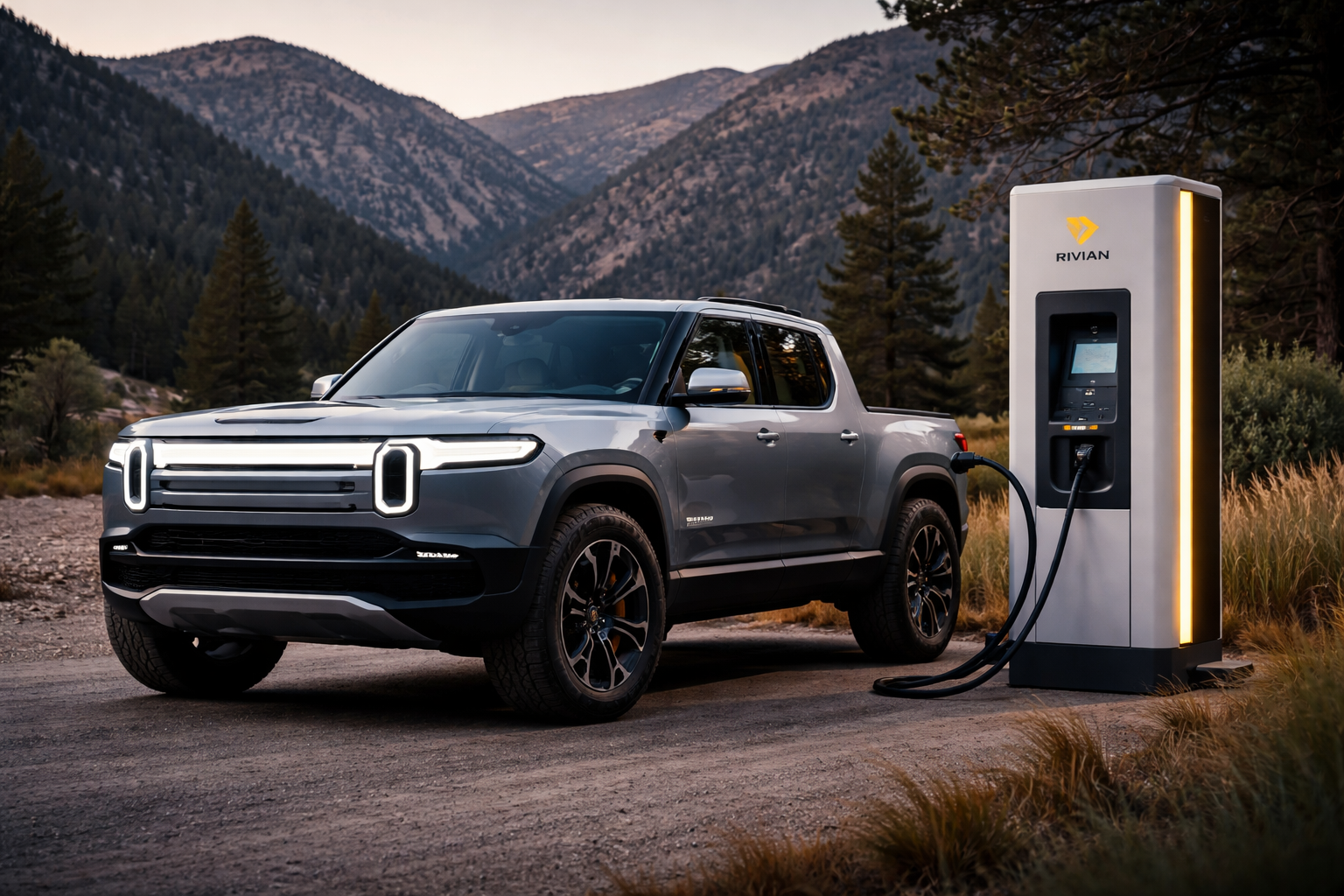
The Rivian 2025.26 update features mark one of those quiet but meaningful software releases that doesn’t chase headlines, yet clearly reflects how the brand is thinking about long-term ownership. Instead of flashy promises, this update focuses on refinement: smoother daily driving, smarter energy use, and a more predictable ownership experience.
For current owners, it feels less like “new tricks” and more like Rivian tightening the bolts across the platform. For anyone watching the brand closely, it offers insight into where Rivian’s priorities are heading as its vehicles mature.
At the center of this update is Rivian, continuing its strategy of treating software as a living layer, not a one-time feature set.
A Software Update Shaped by Real-World Driving
One thing that stands out in the Rivian 2025.26 update features is restraint. This isn’t an overhaul. It’s a response to how people actually use these vehicles after months or years on the road.
Owners have logged miles in cold climates, off-road conditions, and long highway stretches. The update reflects that data. Instead of radical UI redesigns, Rivian focused on behavior under stress: battery prediction accuracy, drivetrain smoothness, and system stability.
That tells you something important. Rivian seems to be moving from an “early adopter” phase into a reliability-focused phase, where consistency matters as much as innovation.
Smarter Range Estimation and Energy Management
More Accurate Range in Mixed Conditions
One of the most noticeable Rivian 2025.26 update features is improved range estimation. Earlier versions sometimes struggled when trips mixed highway driving, elevation changes, and temperature swings.
The new logic weighs recent driving behavior more heavily. If you’ve been towing, climbing, or driving aggressively, the estimate adjusts faster instead of staying optimistic for too long.
This matters in real life. It reduces that low-grade anxiety that comes from watching your remaining miles drop faster than expected halfway through a trip.
Battery Preconditioning Improvements
Battery preconditioning has been refined to work more intelligently with navigation. If a fast charger is set as your destination, the system now warms or cools the battery with better timing.
Instead of aggressive early preconditioning, it waits until it’s genuinely useful. The result is less wasted energy and more consistent fast-charging performance when you arrive.
Drive Modes Feel More Predictable
Smoother Transitions Between Drive Modes
Switching between drive modes now feels more deliberate. In earlier versions, some drivers noticed abrupt changes in throttle response or suspension behavior, especially when moving between All-Purpose and Sport modes.
The 2025.26 update smooths these transitions. Inputs feel more progressive, which is especially noticeable in stop-and-go traffic or on uneven surfaces.
It’s not dramatic, but it reduces fatigue during long drives.
Off-Road Calibration Tweaks
For off-road use, Rivian adjusted traction control thresholds and wheel-slip response. The changes don’t make the vehicle more aggressive; they make it more readable.
Drivers report better feedback when climbing loose terrain or navigating wet trails. The vehicle communicates its limits earlier instead of correcting suddenly.
Infotainment and Interface Refinements
Faster Response, Fewer Interruptions
Infotainment performance is one of those things drivers stop noticing when it works well. The Rivian 2025.26 update features include backend optimizations that reduce lag when switching screens or loading maps.
Touch inputs register more consistently, and transitions feel less jittery. It’s the kind of improvement you only notice after using the vehicle for a few days and realizing you’re no longer waiting on the screen.
Navigation Gets More Practical
Navigation routing has been quietly improved, especially for longer trips. Charging stops are suggested with better spacing, avoiding overly conservative early stops.
Arrival time estimates also adapt more realistically when traffic patterns change mid-route, rather than sticking to the original projection for too long.
Driver Assistance Updates Without Overreach
Subtle Improvements to Highway Assist
Rivian didn’t try to redefine driver assistance in this update. Instead, lane-keeping and adaptive cruise behavior were refined to feel more natural.
Steering inputs are smoother, and the system is less likely to overcorrect when lane markings fade briefly. It still expects driver attention, but it now feels more like a cooperative system than a rigid one.
Fewer False Alerts
Owners previously mentioned overly sensitive alerts in certain conditions. The 2025.26 update reduces unnecessary warnings without silencing important ones.
That balance matters. Alerts should inform, not annoy, and this update gets closer to that ideal.
Climate Control That Thinks Ahead
Improved Cabin Temperature Stability
Climate control updates rarely sound exciting, but they have daily impact. Temperature regulation is now more consistent, particularly in extreme heat or cold.
Instead of cycling aggressively, the system maintains comfort with smaller adjustments. This also has a modest but real effect on efficiency during long drives.
Better Integration With Scheduled Departure
Scheduled departure now works more reliably with climate and battery settings. Pre-heating or cooling starts closer to departure time, reducing unnecessary energy use while still delivering a comfortable cabin.
Charging Behavior Feels More Polished
More Consistent Fast-Charging Curves
Fast-charging performance hasn’t changed dramatically on paper, but behavior is more stable in practice. Power delivery ramps more smoothly, especially in mid-charge ranges.
This reduces sudden drops that previously made charging sessions feel unpredictable.
Clearer Charging Feedback
Charging screens now present information in a calmer, clearer way. Instead of overwhelming the driver with changing numbers, the focus is on time remaining and realistic completion estimates.
That clarity makes planning easier, especially on road trips.
Bug Fixes That Matter More Than New Features
Not every improvement makes a good headline. The Rivian 2025.26 update features include dozens of small fixes that quietly improve ownership.
These include fewer random sensor errors, more reliable Bluetooth connections, and improved system wake-up behavior after long parking periods.
For long-term owners, these changes add up. A vehicle that behaves predictably builds trust over time.
What This Update Says About Rivian’s Direction
Stepping back, the 2025.26 update feels like a confidence move. Rivian isn’t trying to impress new buyers with gimmicks. It’s focused on existing owners and long-term durability.
That approach suggests the company is listening closely to feedback and using real-world data to guide development. It’s also a sign that Rivian is settling into its role as a mature automaker, not just an ambitious startup.
Software updates like this don’t change how the vehicle looks on day one. They change how it feels after year three.
Who Benefits Most From the 2025.26 Update
Drivers who commute daily will notice smoother controls and better efficiency. Road-trip drivers benefit from improved navigation and charging logic. Off-road users gain more predictable traction behavior.
Even drivers who rarely think about software updates will feel the difference indirectly. Fewer interruptions, clearer information, and calmer systems all contribute to a better experience without demanding attention.
FAQ: Rivian 2025.26 Update Features
Is the Rivian 2025.26 update available to all models?
Availability depends on hardware configuration and region, but most recent Rivian vehicles are eligible. Updates roll out gradually, not all at once.
Does the update improve battery range?
It doesn’t increase battery capacity, but range estimates are more accurate. Many drivers find this more useful than optimistic numbers.
Will charging speeds be faster after the update?
Peak charging speeds remain similar, but consistency improves. Charging sessions feel more predictable and stable.
Are there changes to driver assistance systems?
Yes, but they’re subtle. Lane-keeping and adaptive cruise behavior are smoother, with fewer unnecessary alerts.
Can I delay installing the update?
Rivian allows some flexibility, but long-term postponement isn’t recommended. Many improvements relate to system stability and safety.
Final Thought
The Rivian 2025.26 update features won’t redefine your vehicle overnight. What they do is refine it quietly, thoughtfully, and in ways that become more valuable the longer you own it. That kind of progress doesn’t shout. It lasts.
