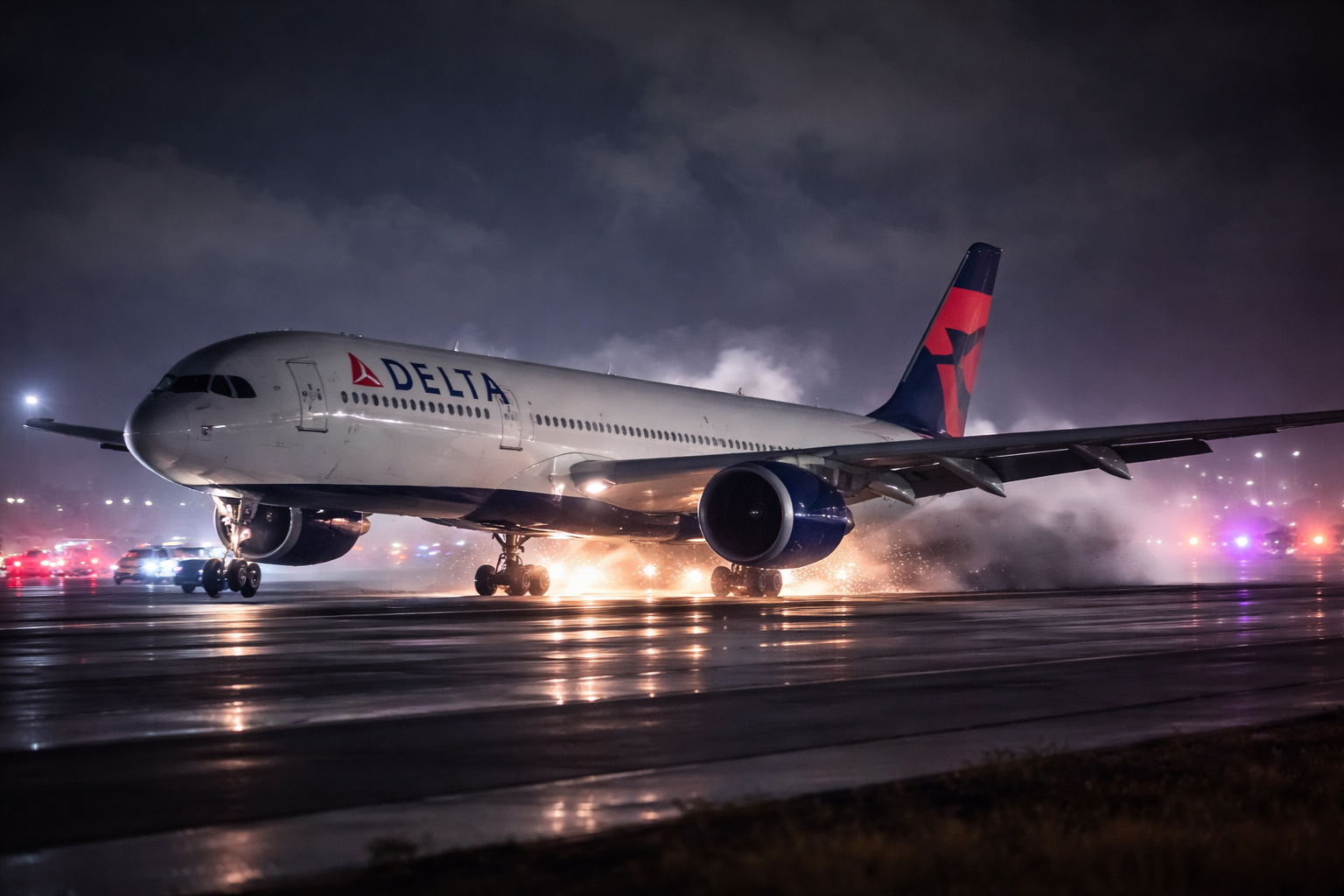
When Delta Flight DL275 diverted to LAX, it caught attention not because of panic or chaos, but because it showed how modern aviation handles uncertainty in real time. The flight, operated by Delta Air Lines, was scheduled to travel from Detroit to Tokyo. Instead, after hours in the air, it made an unscheduled landing at Los Angeles International Airport.
For passengers, a diversion can feel confusing and disruptive. For aviation professionals, it’s often a sign that safety systems and decision-making processes are working exactly as intended. This article explains the DL275 diversion in plain terms, with practical context, realistic reasoning, and no speculation beyond what the situation supports.
The Original Route and Aircraft on Delta Flight DL275
Delta Flight DL275 is a long-haul international service connecting the U.S. Midwest to Japan. On the day of the incident, the aircraft departed Detroit bound for Tokyo Haneda Airport, one of Asia’s busiest and most operationally demanding airports.
The flight was operated using an Airbus A350, a modern wide-body aircraft designed for ultra-long-range routes. This aircraft type is known for fuel efficiency, advanced monitoring systems, and layered redundancy. That last point matters more than most travelers realize.
On flights that cross oceans and polar regions, aircraft systems constantly monitor temperatures, pressure, airflow, and engine conditions. Pilots are trained to respond not just to failures, but to early warning signs that something may not be operating within ideal parameters.
What Triggered the Diversion Mid-Flight
Several hours into the journey, while cruising at high altitude over cold airspace, the flight crew received an alert related to one of the engine anti-ice systems.
An engine anti-ice system prevents ice buildup on critical engine components. Ice accumulation at cruising altitude may sound unlikely, but at 35,000 feet, moisture and temperature conditions can combine in ways that affect engine efficiency if not actively managed.
Importantly, this was not a loss of engine power and not a visible emergency inside the cabin. It was a systems issue identified early, through onboard diagnostics, before it escalated into something more serious.
This distinction matters. Aviation safety is built on addressing potential problems early, not waiting for them to become emergencies.
Why Delta Flight DL275 Diverted to LAX Specifically
One of the most common questions passengers ask is why a flight diverts to a location that doesn’t seem closest on the map. In the case of DL275, Los Angeles was a strategic choice, not a random one.
Maintenance Capability Comes First
Not every airport can handle a fully loaded long-haul aircraft with a sophisticated engine system. LAX has specialized maintenance teams, equipment, and parts access suitable for wide-body aircraft like the A350. That allows engineers to properly inspect and address issues without delay.
Runway Length and Landing Conditions
A long-haul aircraft carries significant fuel weight. LAX offers long runways, predictable weather patterns, and infrastructure designed for heavy international traffic, making it a safer choice for a precautionary landing.
Passenger Support and Logistics
A diversion doesn’t end at touchdown. Airlines must manage hotels, rebooking, crew schedules, and onward travel. LAX is one of Delta’s strongest support locations on the West Coast, making it far easier to care for passengers responsibly.
In short, the decision prioritized safety first, disruption second.
What Happened After the Aircraft Landed
After landing safely at LAX, passengers disembarked normally. There was no evacuation, no emergency slide deployment, and no injuries reported. This detail is important because it shows the situation remained controlled from start to finish.
On the ground, several parallel processes likely occurred:
- Engineers inspected the engine and anti-ice system using flight data
- Operations teams assessed repair time versus aircraft swap options
- Customer service teams coordinated accommodations and rebooking
- Crew duty time limits were reviewed under aviation regulations
These steps take time, but they exist to prevent rushed decisions that could compromise safety later.
Is This Kind of Diversion Rare?
Diversions are uncommon relative to the total number of daily flights, but they are not extraordinary. Every day, somewhere in the world, a flight diverts due to weather, medical needs, mechanical alerts, or airspace issues.
What makes DL275 notable is not the diversion itself, but the reasoning behind it. A system alert did its job, pilots trusted their training, and the airline chose a conservative outcome.
From a safety perspective, this is exactly how aviation is supposed to work.
Why This Incident Matters for Regular Travelers
Many passengers assume that if a plane is new and the airline reputable, diversions shouldn’t happen. In reality, advanced aircraft detect more data, not less. That means crews have better visibility into early-stage issues, allowing them to make smarter decisions sooner.
If DL275 had continued without addressing the system alert, the risks would have increased later in the flight, especially approaching Japan’s busy airspace with fewer diversion options.
A delay on the ground is always preferable to uncertainty in the air.
Understanding Airline Decision-Making During Diversions
Airline decisions during diversions are guided by three priorities:
- Safety of passengers and crew
- Aircraft integrity
- Operational feasibility after landing
Passenger convenience matters, but it is never the first variable in the equation. When airlines explain this clearly, trust tends to follow, even when plans change unexpectedly.
What Passengers Can Learn from Delta Flight DL275
If you ever experience a diversion:
- A calm cabin usually means the issue is being managed early
- Diversions are often precautionary, not reactive
- The chosen airport is selected for capability, not proximity
- Clear communication may lag behind decisions, but not intent
Understanding this doesn’t make delays enjoyable, but it does make them easier to contextualize.
FAQs About Delta Flight DL275 Diverted to LAX
Why was Delta Flight DL275 diverted to LAX instead of continuing to Tokyo?
The crew identified a technical system issue that required inspection at a major maintenance-capable airport before proceeding further.
Was anyone in danger during the flight?
No. The diversion was precautionary, and the aircraft landed safely without injury or emergency procedures.
Does an anti-ice system issue mean engine failure?
Not necessarily. It indicates a system designed to prevent future problems may not be operating optimally, which warrants caution.
Why do airlines choose far-away airports for diversions?
Because the right facilities, runways, and support matter more than distance when managing technical issues.
Will passengers be compensated after a diversion like this?
That depends on airline policy, delay length, and local regulations. Airlines usually provide rebooking and accommodations when required.
Final Perspective
The story of delta flight dl275 diverted lax is not about failure. It’s about modern aviation functioning as designed: systems detecting anomalies, pilots making informed decisions, and airlines choosing safety over schedule.
For passengers, it’s a reminder that delays sometimes mean something went right, not wrong.
